Work
I design and build interfaces for institutions with millions of visitors.
Fifteen Years of cmu.edu
Carnegie Mellon hired me in 2007 as the only web designer on its marketing team. The rest of the marketing team, from developers to videographers, shaped the work with me. The HTML, CSS, presentational JavaScript, and SVG animations came from me, along with accessibility and performance tuning.
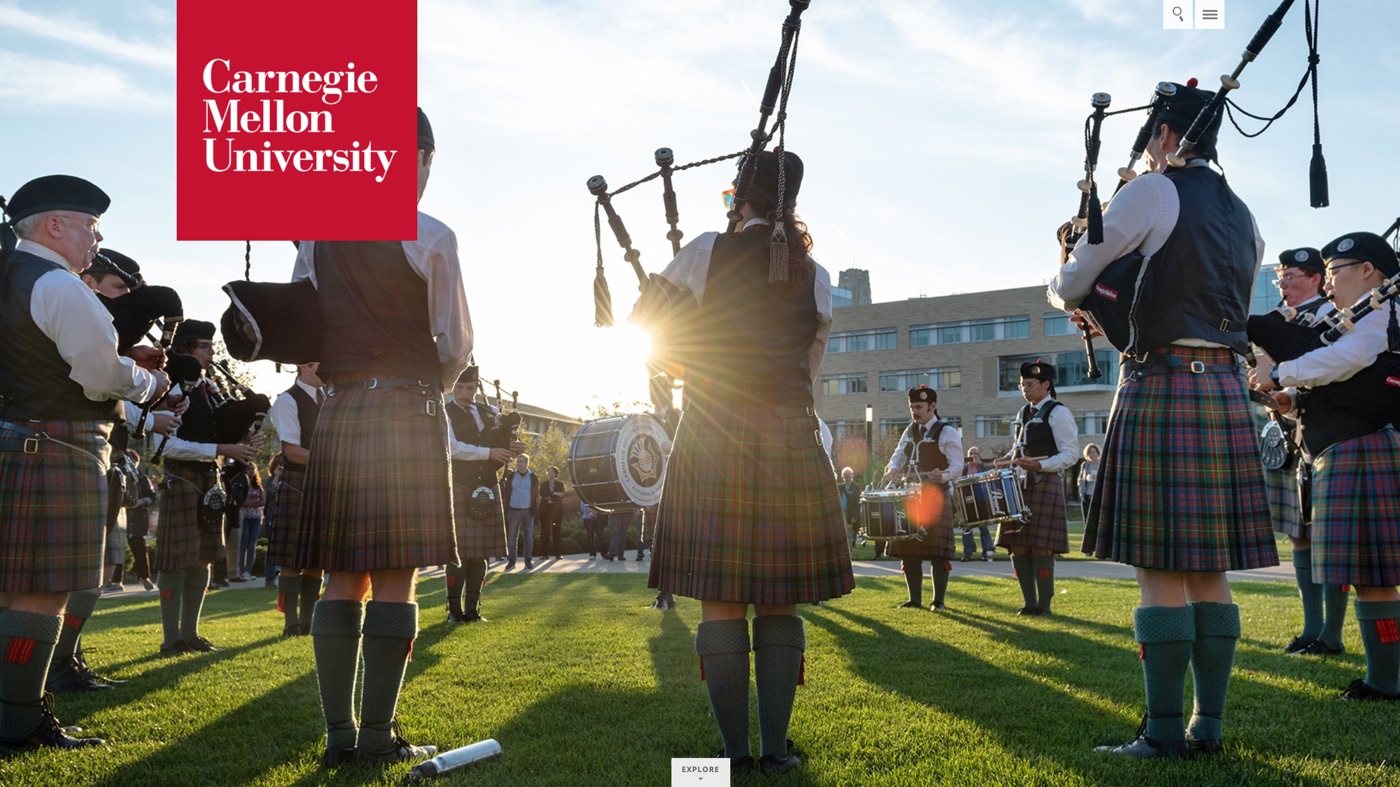
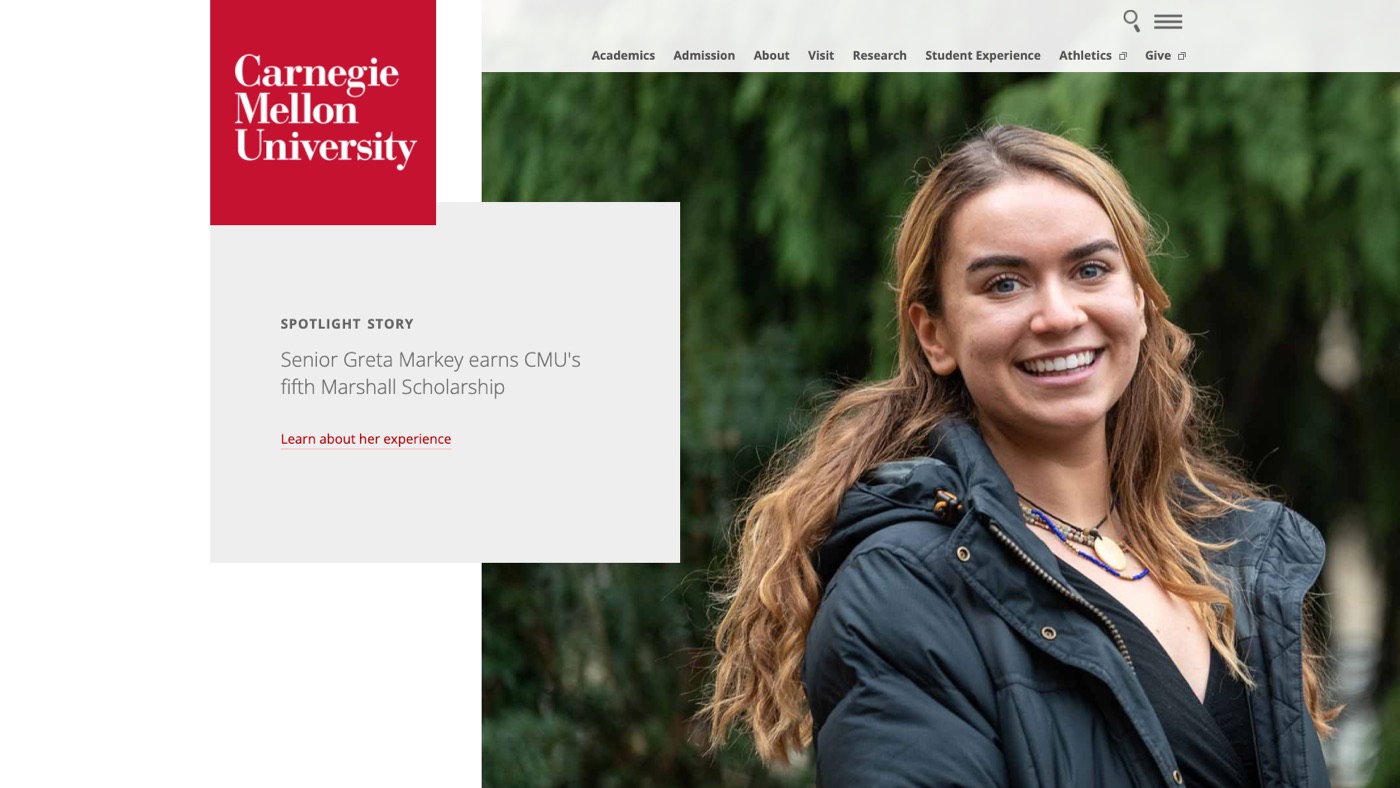
The last homepage I worked on introduced the wordmark square: CMU's wordmark stacked inside a red square, pinned to the top left corner. My early designs let it weave above and behind page elements as you scrolled. Leadership kept the square and its fixed corner perch but decided to cut the z-index cuteness.
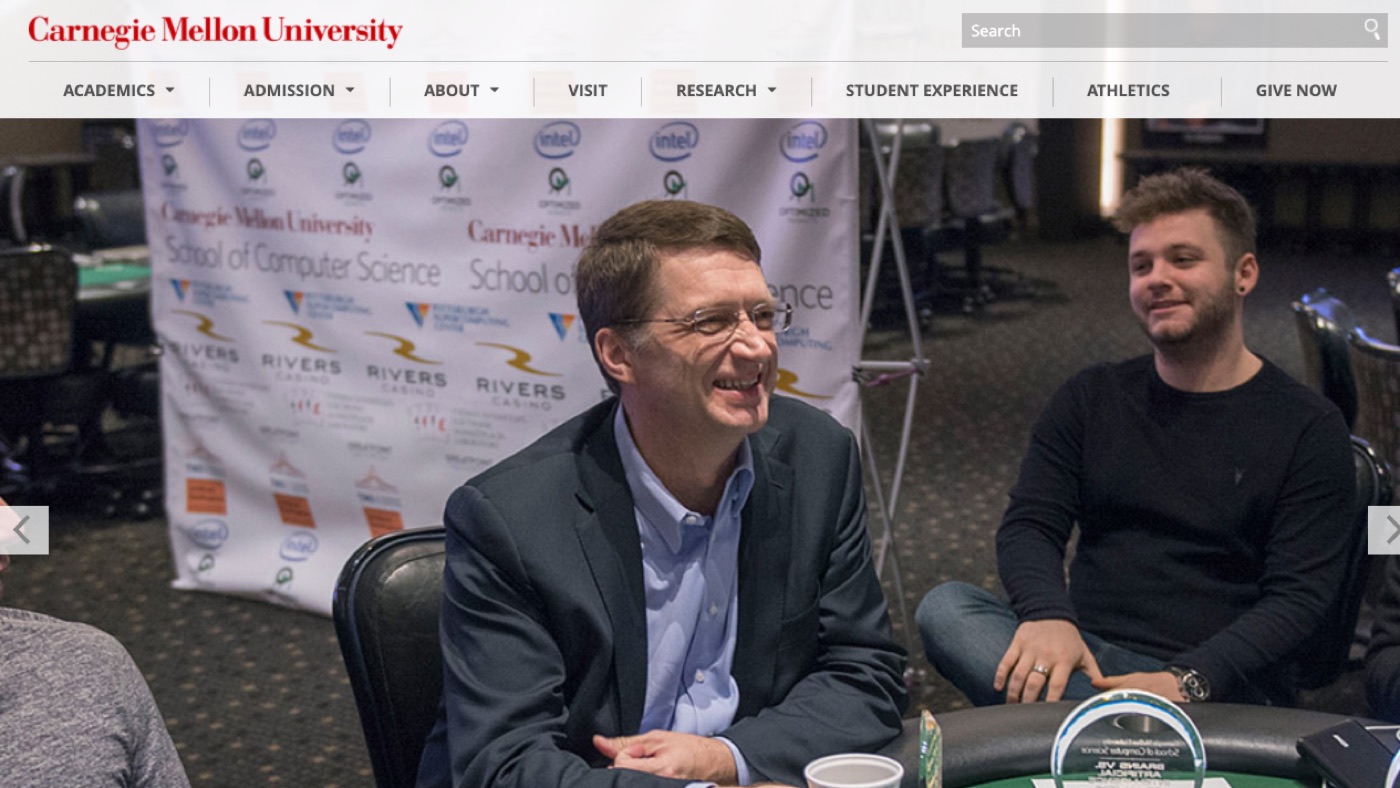
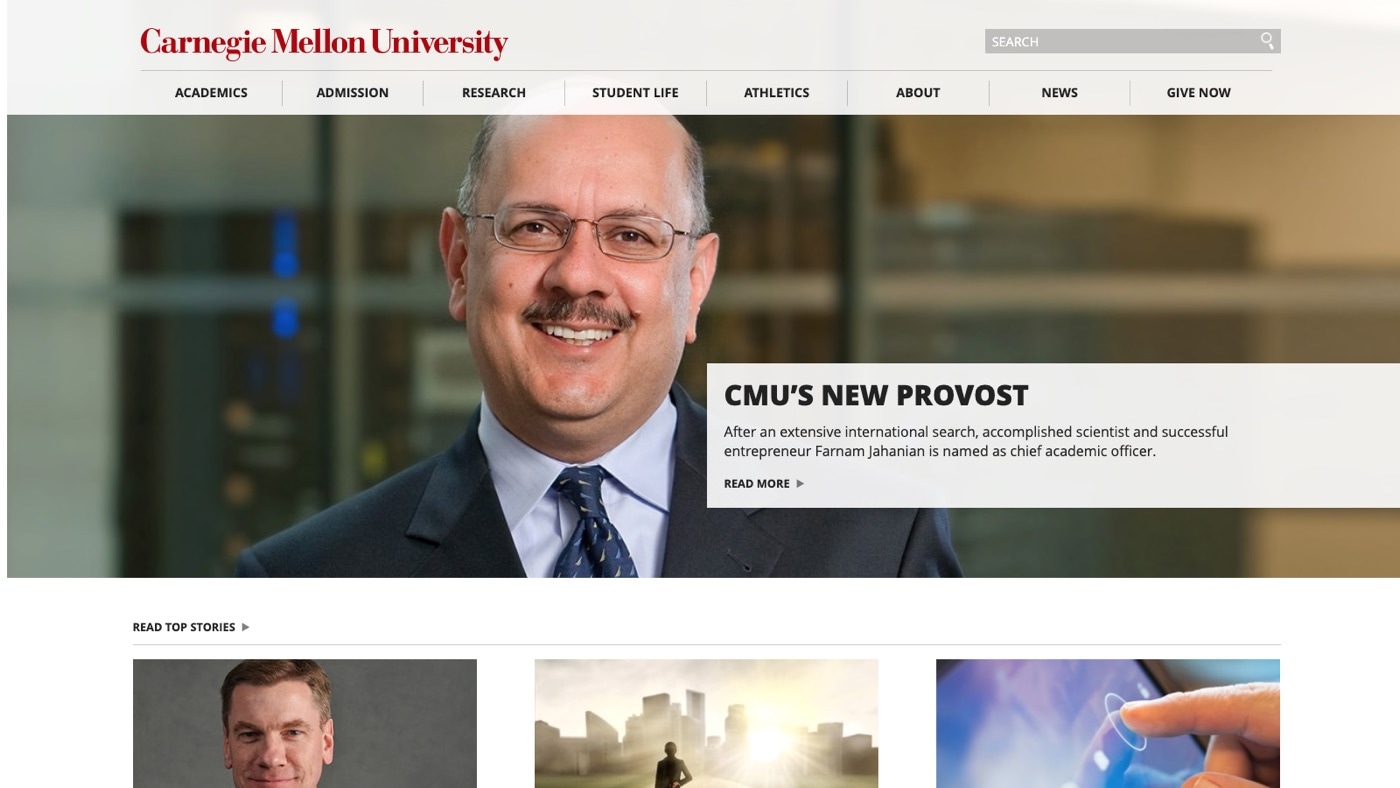
CMU has since redone its homepage. But college, departmental, and admissions sites across the university still display some of my designs and code. A legacy for my alma mater.
The XPS Relaunch
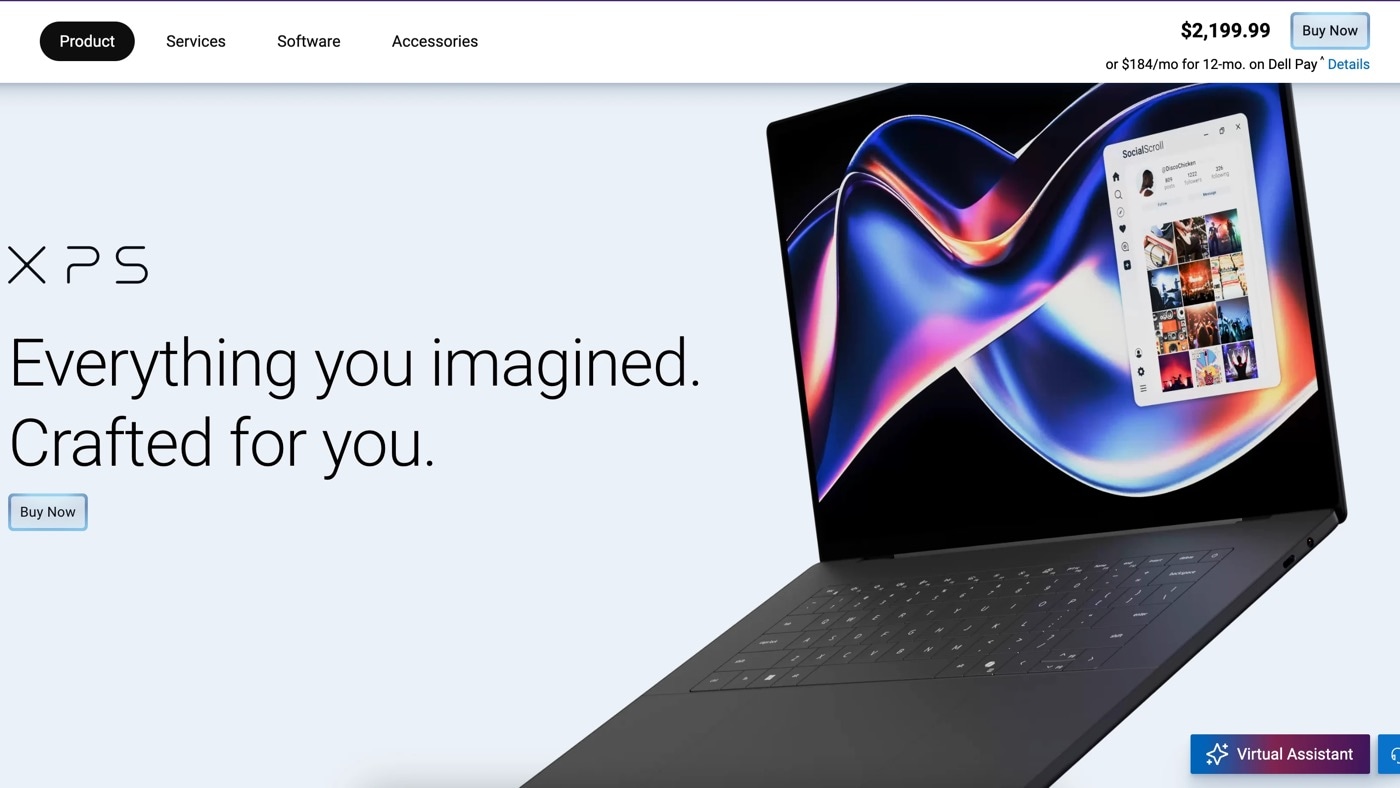
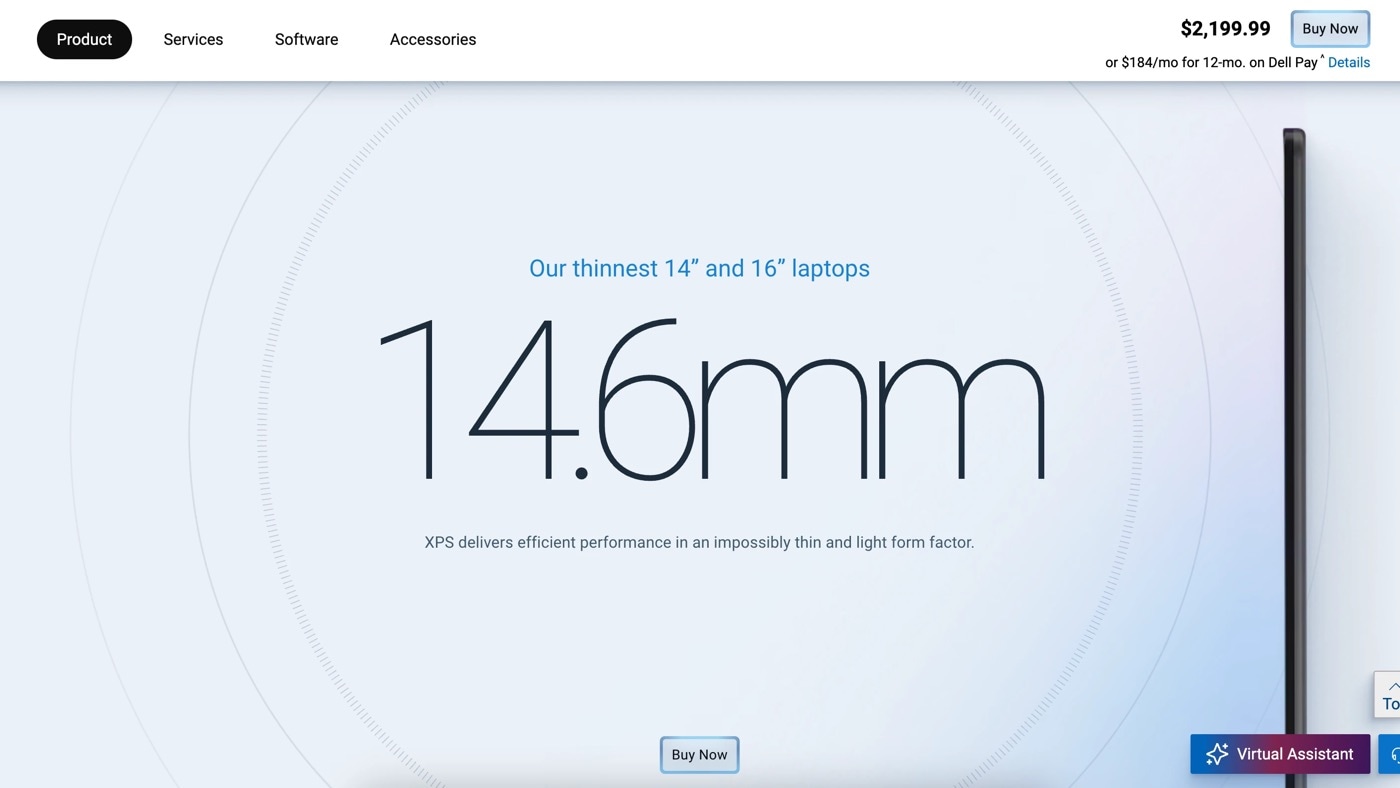
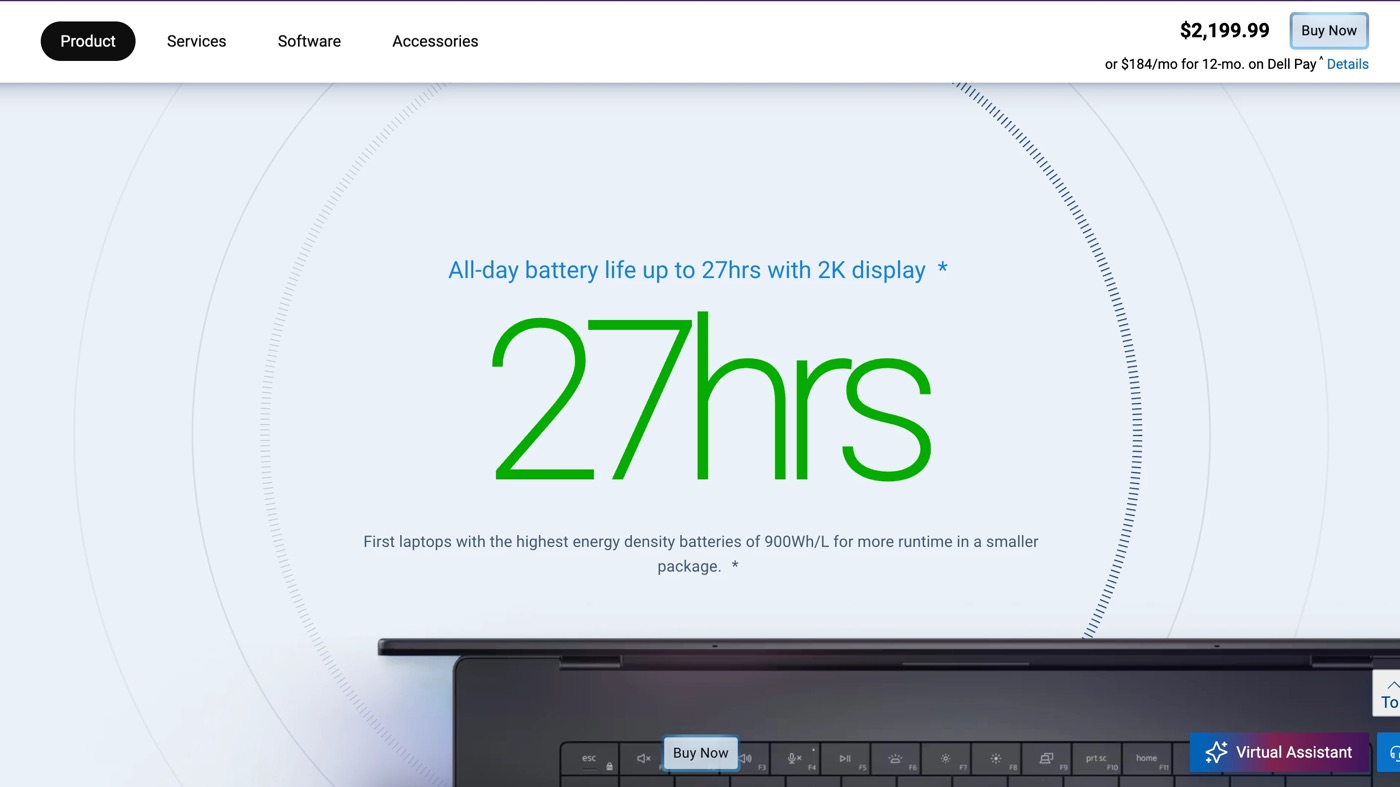
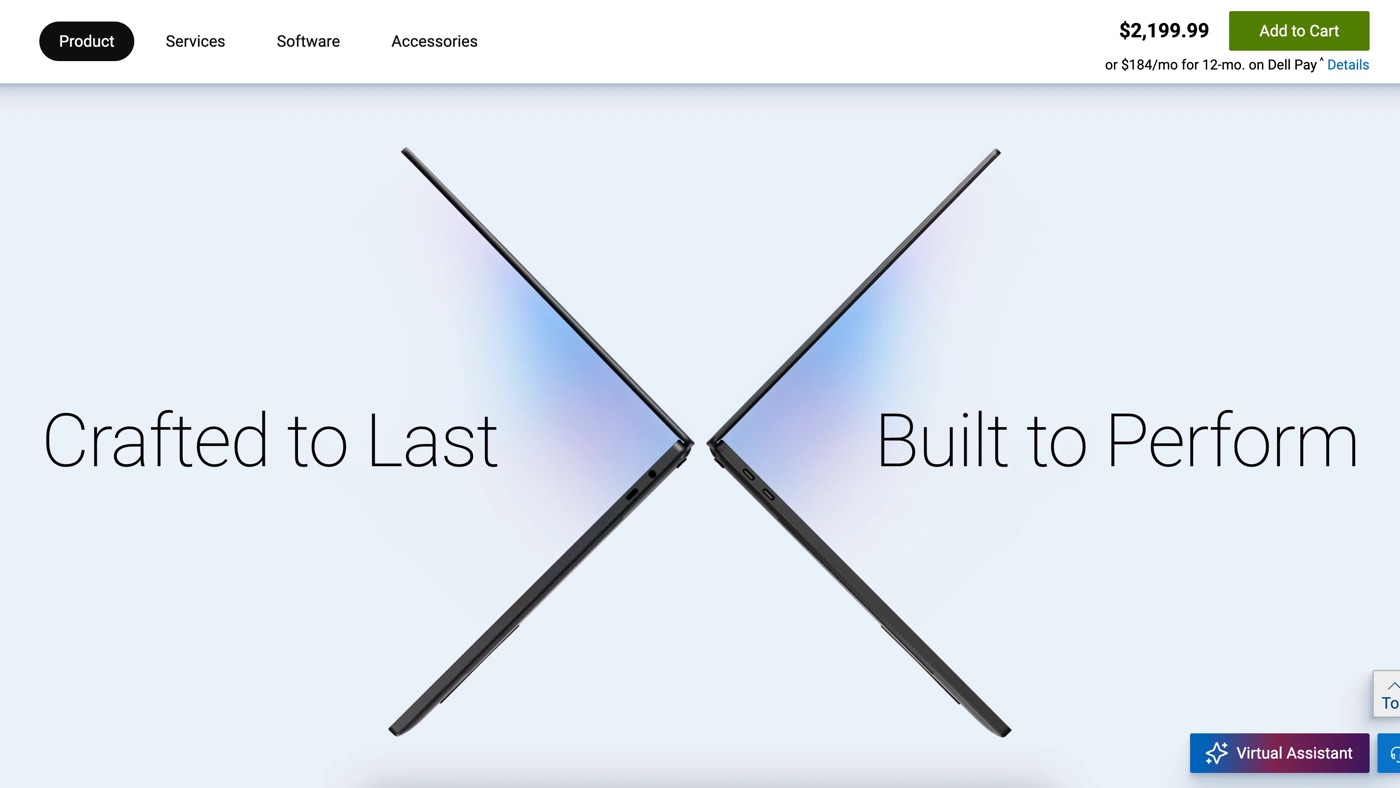
Dell relaunched its XPS laptops across multiple regions under embargo, and the news made national tech headlines. I served as lead engineer for the online experiences that carried the launch.
An outside agency designed the campaign. My job was to make it real on Dell's site. The agency built its concept on GSAP, an animation library the team had never used, so I learned it while building with it. The pages shipped on time, and XPS sold out in two countries.
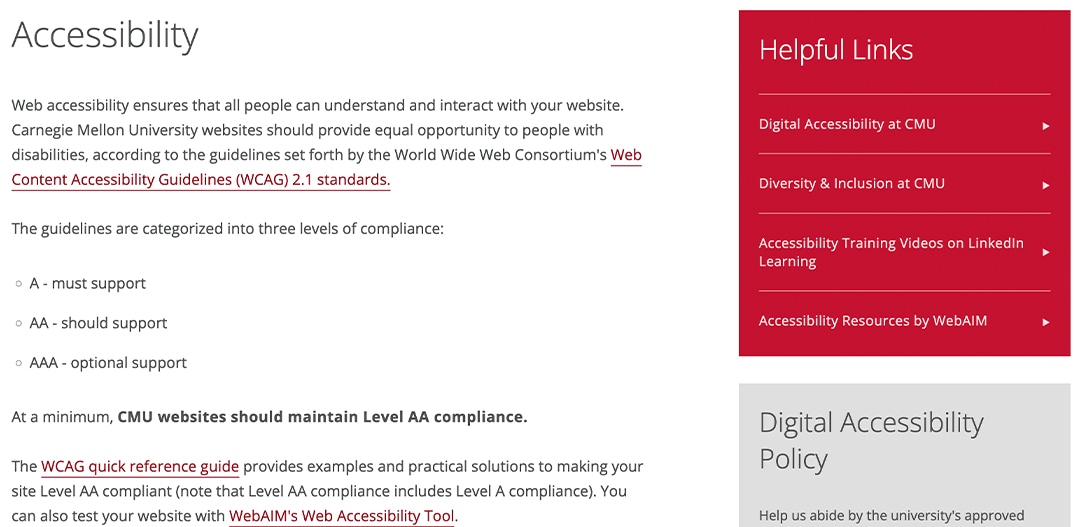
Accessibility Standards and Practice
At Carnegie Mellon, I wrote the web accessibility standards, built on research, an accessibility audit, and conference learnings. They still live on CMU's web branding site today. The Office of Accessibility and I ran workshops together; its leader showed staff what screen reader navigation feels like, and I presented the guidelines and the work behind them.
At Dell, I adapted the company's accessibility guidelines to A/B testing. One of the guidelines is that if the control is not accessible, do not fix it inside an experiment. This rule ensures that the tests measure what they are meant to measure and not something else.
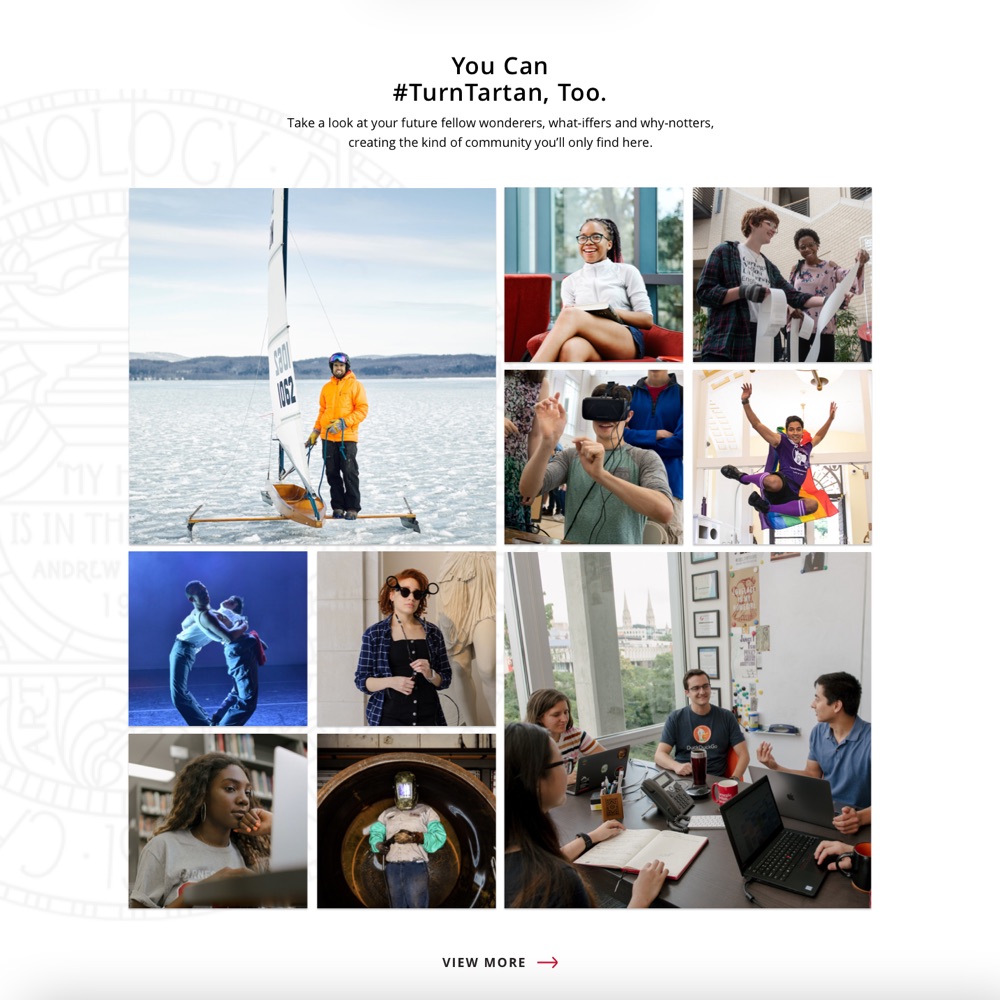
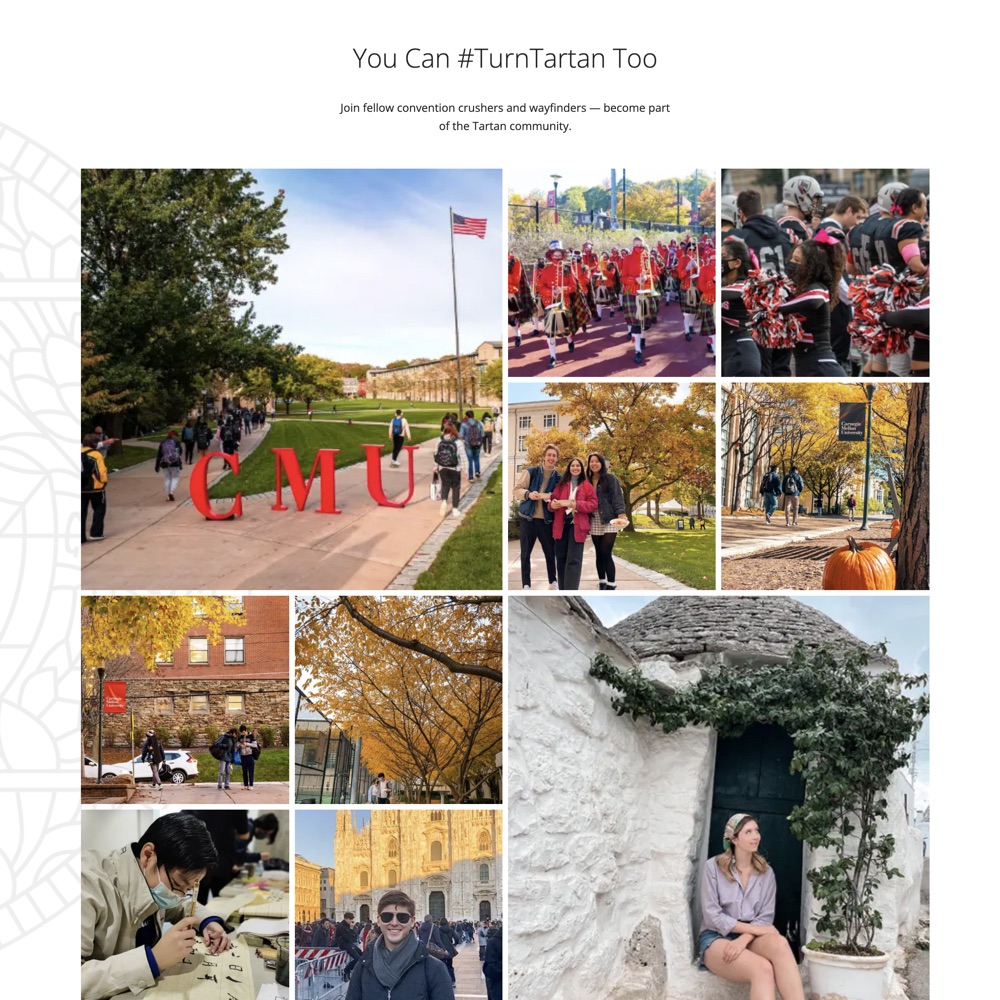
Accessible Image Gallery
Carnegie Mellon hired an agency to redesign the Admission website. The agency designed a handsome gallery module and handed over flat comps: no interaction, no animation, no functionality, no accessibility. I built the rest.
I pulled a JSON feed from CMU's Curator account, which gathered photos from X and Instagram, and laid it out with CSS Grid in a custom Twig template. Each image revealed its caption on hover and on focus, so a keyboard user reaches the same content as a mouse user.
Experiments on International Storefronts
Dell runs A/B experiments on international storefronts. Dell.com sells to everyday customers. Premier is where companies log in and order computers and servers in bulk, or a single machine for one new employee. I build experiment variants for both.
A variant starts with Figma designs or light documentation and the metrics to capture. Then the real research begins, because some important details hide until development. Devs often consult with product teams to clarify requirements and address oversights.
The craft is defensive: confirm elements exist, wait for control to load, prefer CSS over JavaScript, trim every millisecond. Performance is everything.
Experience Design Summit
I worked on Dell's Experience Design Summit, a global, livestreamed event, for several years in different capacities. At the last one, I served as co-chair.
Chairs plan the sessions, work with speakers and panelists, build the summit website, and handle whatever else the day throws at them. One session started with me backstage, checking that every speaker was ready. Lots of communication, often chaotic.
Books for Manifest Ministries
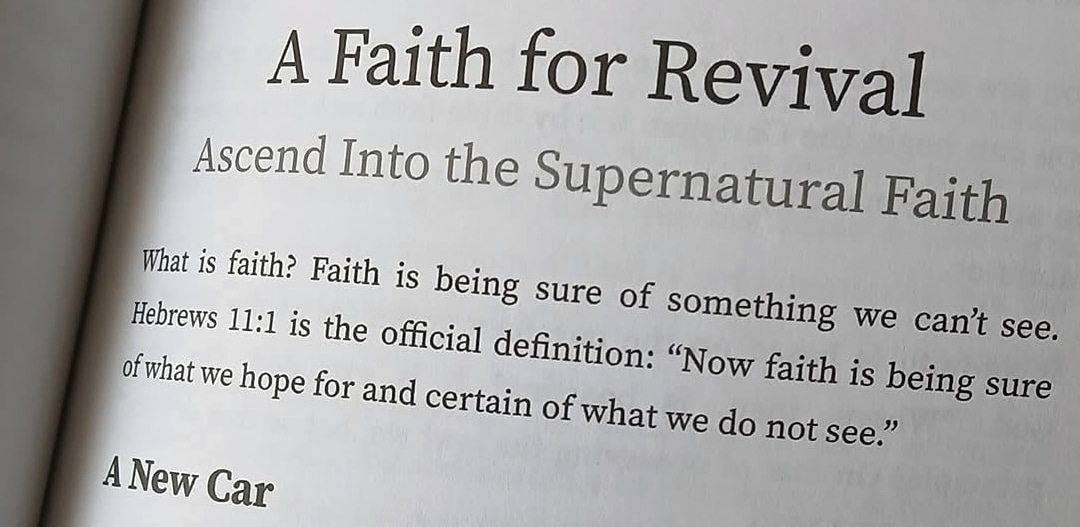
I am creative director for Manifest Ministries, the nonprofit teaching ministry of Pastor W. Joseph Stump, and I sit on its board. I design books, marketing assets, signage, and the website.
I devised brand guidelines, color scheme, and typographic style. I lay each book out in Google Docs, styling the headings and the type by hand. The manuscripts arrive as Word documents, often formatted with little consistency. So I built my own Claude skill that turns a messy Word file into clean Markdown, ready to import into Google Docs. I shoot most of the cover photos myself.
Patent Pending
I keep up with the changing field and build with similar engineers. Some ideas are worth protecting. Half a dozen of mine have gone to the patent committee. One went further: U.S. patent pending for a media file retrieval method I co-invented at Dell.
Anybody who has hunted through a media library knows the problem. Thousands of unorganized files, and the one you need is in there somewhere. This novel technique helps solve the problem.
I work beside smart people, some inventors. I did not see this as part of my career trajectory, a true blessing.